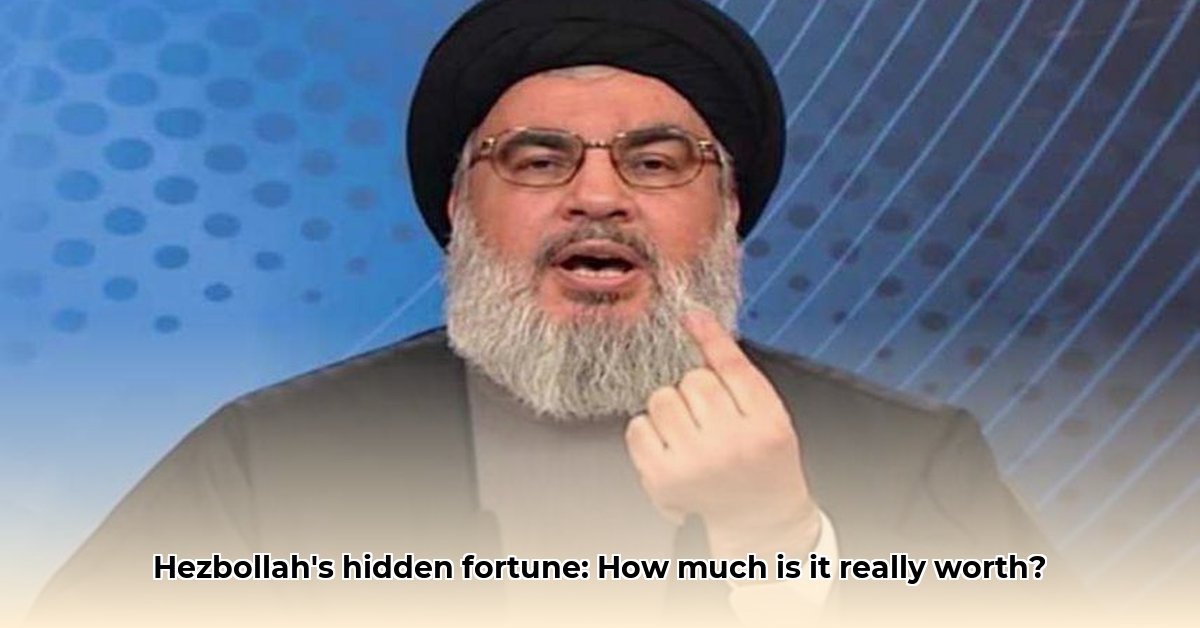
Hezbollah's Financial Landscape: A Complex and Elusive Target
Determining Hezbollah's precise net worth is a formidable challenge. The organization's financial operations are deeply clandestine, utilizing a diverse array of funding streams and sophisticated techniques to obscure its assets. Estimates of annual income vary wildly, ranging from hundreds of millions to billions of dollars, highlighting the inherent difficulties in accurately assessing its financial strength. This complexity underscores the importance of understanding the various facets of Hezbollah's financial network.
The Lifeline from Iran: A Cornerstone of Hezbollah's Resources
Iran's financial support represents a crucial pillar of Hezbollah's financial infrastructure. While precise figures remain undisclosed, expert consensus points to significant annual contributions, potentially reaching hundreds of millions or even billions of dollars. The 2015 Iran nuclear deal, which temporarily lifted certain international sanctions, may have briefly increased this funding. However, the exact nature and extent of Iranian support remain a subject of ongoing investigation and analysis. How significantly has this relationship shifted post-JCPOA? Understanding this dynamic is pivotal for assessing Hezbollah's overall financial capacity.
Beyond Iran: Diversification and Illicit Activities
Hezbollah's financial strategy extends beyond reliance on Iranian support. The group has cultivated a diversified portfolio of income-generating activities, some legal, others decidedly criminal. Illegal activities, primarily drug trafficking, play a substantial role. These operations are estimated to generate hundreds of millions, if not billions, of dollars annually, providing a vital supplement to Iranian funding and enhancing the organization's resilience. These illicit activities parallel a sophisticated investment strategy: diversification to mitigate risk.
The Art of Deception: Money Laundering and Front Companies
Hezbollah employs a multifaceted approach to concealing its illicit earnings, masterfully utilizing a network of front companies — businesses that appear legitimate on the surface — to launder money and raise funds. These companies blend seamlessly into the local economic landscape, making it exceedingly difficult to trace the origin and flow of funds. This intricate network of shell corporations operates like a complex code, requiring extensive investigation and resources to effectively unveil. This sophisticated strategy presents a significant challenge to international efforts aimed at disrupting Hezbollah's financial operations.
The Impact of Sanctions: A Continuous Tug-of-War
International sanctions form a crucial component of efforts to constrain Hezbollah's financial capabilities. While these measures have undoubtedly disrupted certain networks and hampered specific activities, their overall effectiveness remains a subject of ongoing debate. Hezbollah's remarkable adaptability and Iran's persistent support continually challenge the impact of sanctions. The effectiveness of these sanctions is a complex and dynamic situation. Have sanctions significantly curtailed Hezbollah's financial resources, or have their effects been largely mitigated by alternative revenue streams? Further investigation is essential to determine the true impact.
The Human Cost in Syria: Unquantifiable Financial Impact
Hezbollah's significant military involvement in the Syrian conflict has resulted in substantial human losses. While the human cost is undeniable and morally reprehensible, its precise impact on Hezbollah's long-term financial capacity remains unclear. Further research is needed to determine whether these losses have diminished the group's operational capabilities or merely altered its strategic priorities. To what extent have military losses translated to a decrease in long-term financial viability?
Beyond the Obvious: Unveiling Hidden Revenue Streams
Hezbollah's financial network extends beyond the more widely recognized sources of funding. Ransom payments, donations from sympathetic entities, and potentially other foreign sources contribute to the overall financial picture, adding further complexity to the assessment of the organization's wealth. The relatively limited research focused on these less-visible sources highlights the need for a more comprehensive investigation. How substantial are these less understood funding streams?
Risk Assessment Matrix for Hezbollah's Finances
| Risk Factor | Likelihood | Impact | Mitigation Strategy |
|---|---|---|---|
| Continued Iranian Support | High | Catastrophic | Strengthened sanctions, enhanced diplomatic pressure, improved international cooperation |
| Drug Trafficking Revenue | High | High | Enhanced law enforcement, international intelligence sharing, asset seizure strategies |
| Front Organizations | Medium | Medium | Increased financial scrutiny, improved investigative capabilities, enhanced financial intelligence gathering |
| Cryptocurrency Use | Medium | Medium | Development and implementation of cryptocurrency tracking technologies, international collaboration |
| Adaptation to Countermeasures | Medium | High | Proactive intelligence gathering, predictive modeling, and strategic adaptation by counter-parties |
Conclusion: Ongoing Challenges and Future Research Directions
Understanding Hezbollah's financial resources is fundamental to comprehending regional stability and global security. The ongoing efforts to counter its financial power underscore the necessity for enhanced intelligence gathering, strengthened international cooperation, and improved legal frameworks for prosecuting cross-border financial crimes. The continuing evolution of Hezbollah's financial strategies demands relentless vigilance and sustained research initiatives. The fight against Hezbollah’s finances is an ongoing challenge, requiring continuous adaptation and innovation.